Kuki Go, NYC Tape Artist
Jun 22, 2026
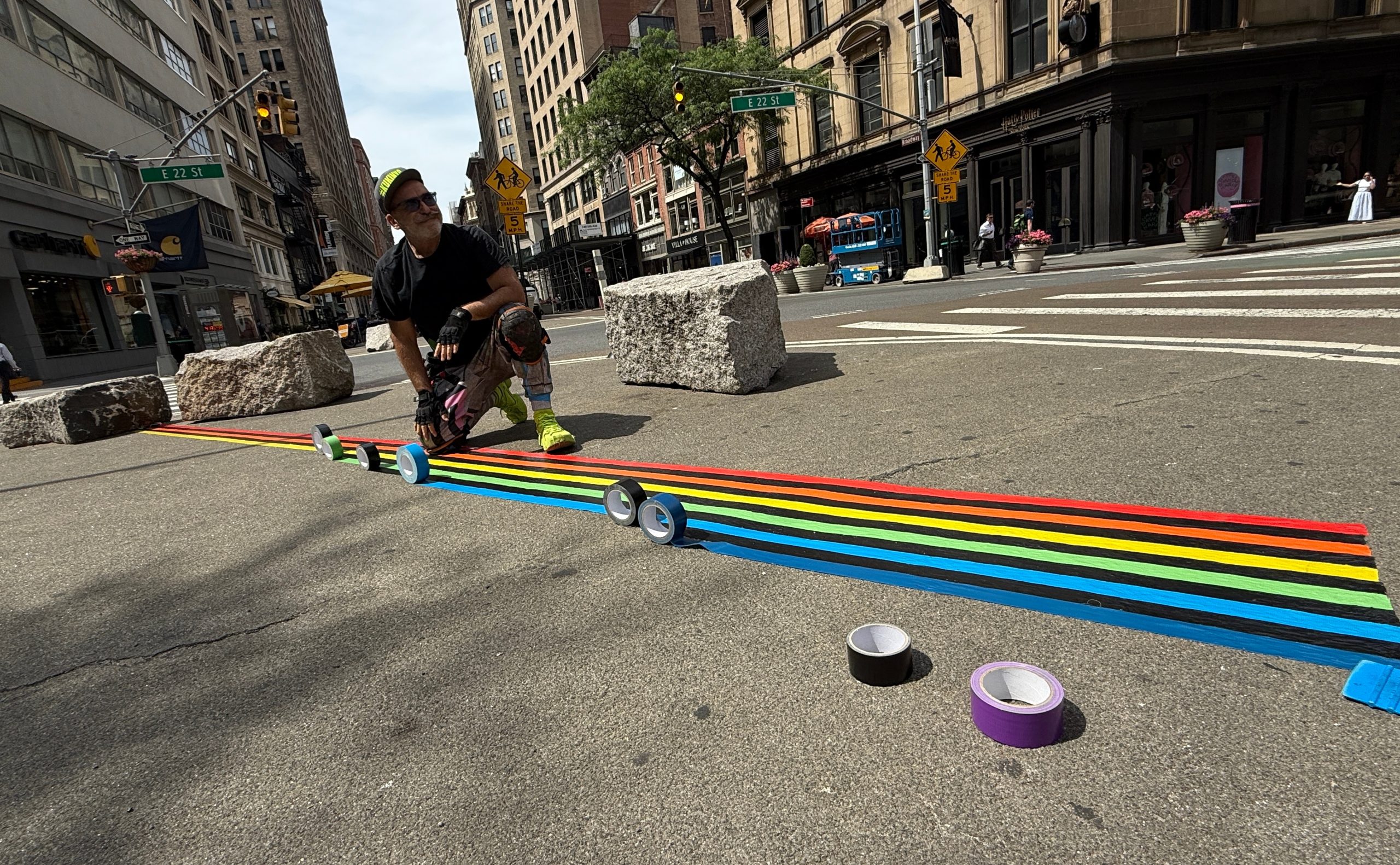)
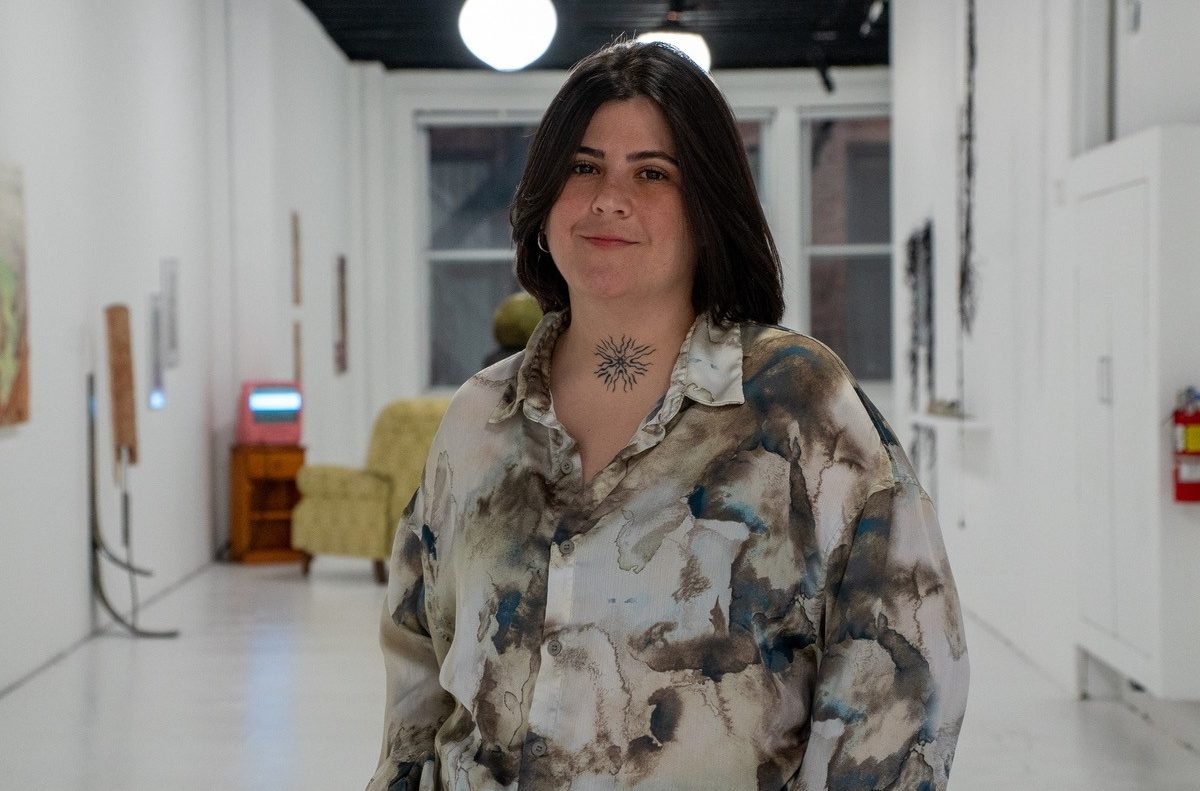
Meet Kuki Go, New York City-based Tape Artist and creator behind our current Rainbow Way on Broadway installation throughout Flatiron & NoMad.
1. Congratulations on your tape art installation, Rainbow Way on Broadway in Flatiron & NoMad! Tell us more about tape art and the inspiration behind your design to celebrate Pride.
Tape art is a temporary art form created with adhesive tape. For me, it sits between drawing, graphic design, installation, and public space intervention. I use tape to create bold geometric compositions that interact with streets, plazas, architecture, and the movement of people.
Rainbow Way on Broadway was inspired by the idea of connection. The rainbow becomes a visual path through Flatiron and NoMad, guiding people through the district while celebrating Pride, visibility, and community. The design uses seven bands of color with my signature black drop shadow, which gives the work depth and makes it recognizable as part of my artistic language. It is playful, graphic, and made to be experienced while walking through the city.
2. What do you hope the community will feel and experience after engaging with your art?
I hope people feel surprised, welcomed, and engaged. My goal is to create a moment that interrupts the routine of the street in a positive way. I want people to stop, look closer, take photos, follow the path, and feel part of the experience.
Public art has the ability to create connection between strangers. With Rainbow Way, I want the community to feel joy, Pride, and a sense of belonging. I want the work to leave an impression, even if the material is temporary.
3. You’re an accomplished multidisciplinary artist and experiential designer who has created several immersive art installations across New York City. After studying graphic design at Universidad Buenos Aires and beginning your career in fashion design, what inspired you to choose a career in the arts? For aspiring artists and entrepreneurs, what professional advice can you share?
I have always been an artist. As a child, I went to art school, and creativity has always been part of how I understand the world. Even when I worked in fashion, graphic design, events, or experiential design, I was always building visual experiences. My career has moved through different fields, but the foundation has always been art.
Choosing a career in the arts was less about one specific decision and more about following the way I naturally work and think. I like transforming spaces, creating visual impact, and building experiences that people remember.
My advice for aspiring artists and entrepreneurs is to stay consistent and take your work seriously. Talent matters, but discipline, communication, and professionalism matter too. Learn how to present your ideas, protect your value, and keep evolving. Your artistic voice grows through practice, risk, and persistence.
4. When did you first begin creating art in public spaces, and what drew you to tape art as a medium?
I began creating tape art in my small apartment on the Lower East Side in the 90’s. At first, I was experimenting with tape as a simple material because it was accessible, immediate, and flexible. I liked how fast I could create lines, shadows, and large shapes without needing a traditional studio.
My work in public spaces started right after the COVID-19 lockdown. At that time, the city was changing, and streets became places for gathering, healing, and reconnecting. Tape felt perfect for that moment because it was temporary, bold, and adaptable. It allowed me to respond to public spaces in real time and create art that people could experience directly.
5. How has the evolution of Broadway in Flatiron & NoMad influenced or inspired your creative process?
Broadway in Flatiron and NoMad has become more than a street. It is a public space where people walk, gather, pause, and experience the city at a different pace. That evolution inspires my creative process because my work is deeply connected to movement and place.
For Rainbow Way, I was inspired by the geometry of Broadway, the plazas, the pedestrian flow, and the energy of the district. The design responds to the street instead of sitting on top of it. It creates a visual rhythm that invites people to move through the area and experience Pride as part of the city itself.
6. As a member of the LGBTQIA+ community, what does celebrating Pride Month mean to you, and how does it influence your artistic work?
Pride Month is a celebration, but it is also a reminder of visibility, resilience, and the work that came before us. As a member of the LGBTQIA+ community, Pride feels personal. It is about being seen, taking space, and honoring the people who made it possible for us to live more openly.
In my artistic work, Pride influences the way I think about public space. I want my installations to feel inclusive, bold, and accessible. Rainbow Way is not only a colorful artwork. It is a public gesture of visibility and connection. It invites people to walk through color, celebrate identity, and feel part of something shared.
8. Finally, choose three words to describe having an art installation in Flatiron & NoMad.
Visible. Connected. Unforgettable.
Header & Thumbnail Photo Credit: Kuki Go